Deze pagina is ook beschikbaar in het Nederlands → Lees hier verder.
Youth Athlete Reheat
Half a day, mid-season, for young athletes
In training everything works. In the game it doesn't.
You miss one, and for the next ten minutes you're not playing your own game. The coach shouts something and your head fills up. Your coordination tightens. You're watching the ref instead of the game. That evening you're still in it, phone in hand.
Or the opposite: you feel nothing. Zoned out. The switch is off and you can't find it again.
Parents recognise it from the sideline. You watch it happen, you see what's left of it in the car, and you don't quite know what to say.
This part is rarely worked on at the club. There's a coach for the shot, a trainer for strength, a physio for the knee. For what happens inside, usually nobody.
That's what this half day is about.
Not a camp, not extra training. No drills, no video analysis, nothing to perform.
What we do
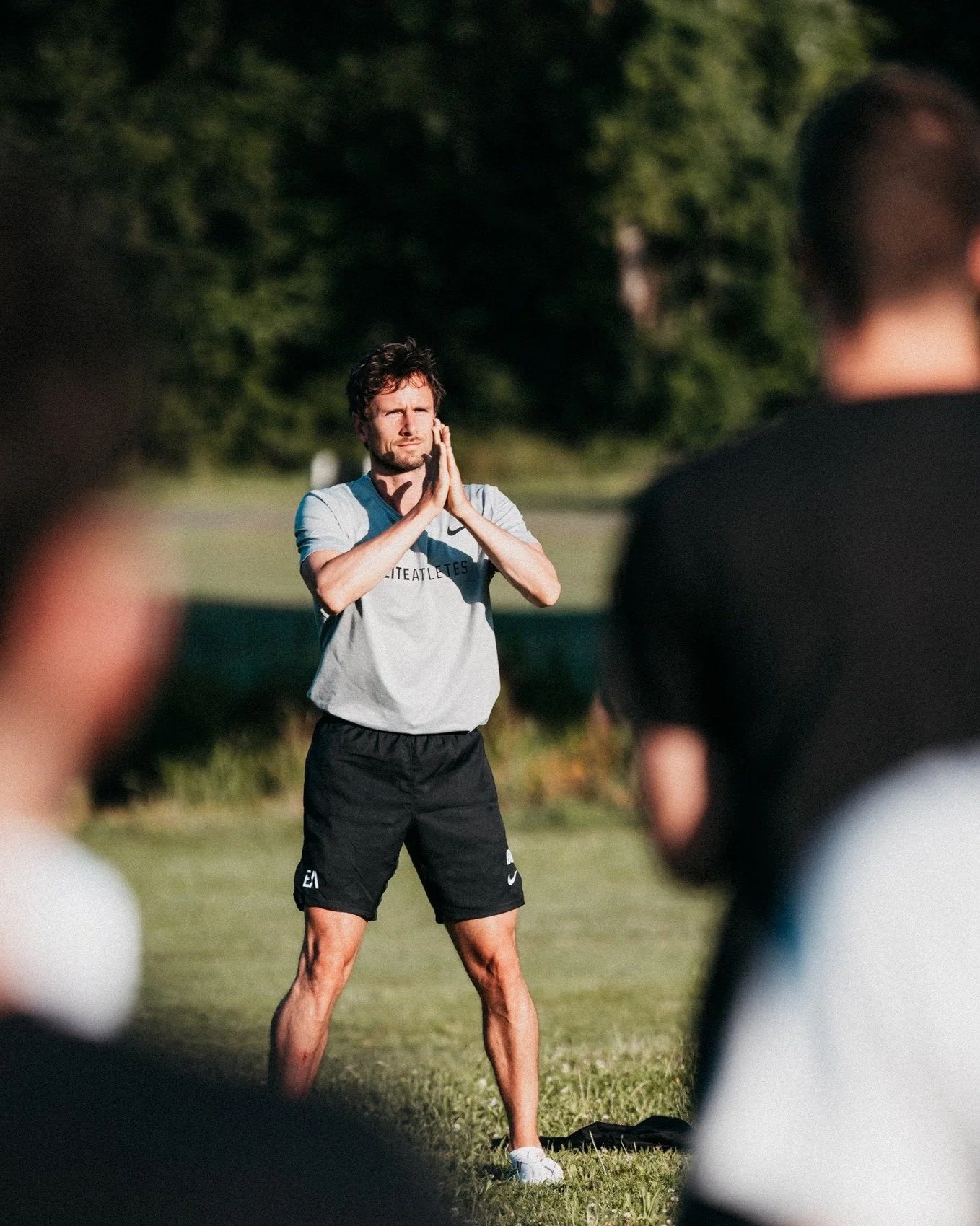
Games under pressure. Small-sided games that build the same kind of pressure a match does. Not to test you. So you can see what you do when it arrives, while it's happening.
The body first. Grounding, breath, and the somatic work that lets you drop tension on purpose. What you can do pre-game, at the free-throw line, in a timeout, walking back on defence.
Your ideal state, in your own words. Your effort, your attitude, your preparation. Most players have never described their own. You go home with one page in your own language, and a simple way to review yourself after a game on what you can actually control.
Intent. What you really want from this season, set from a settled nervous system rather than scribbled after a poor match.
Imagery. The trigger, the miss, and the response you choose, lived through beforehand, so it isn't the first time when it counts. Techniques you can work with daily.
Overhyped and underhyped. Overstimulation, flatness, and the honest conversation about phones, sleep, and the hours around a game.
What you take home
Your own page. Your effort, your attitude, your preparation, in your own words. Precise enough to be useful in the middle of a game. Plus a simple way to score yourself after every training and match, on your own standards instead of statistics you don't control.
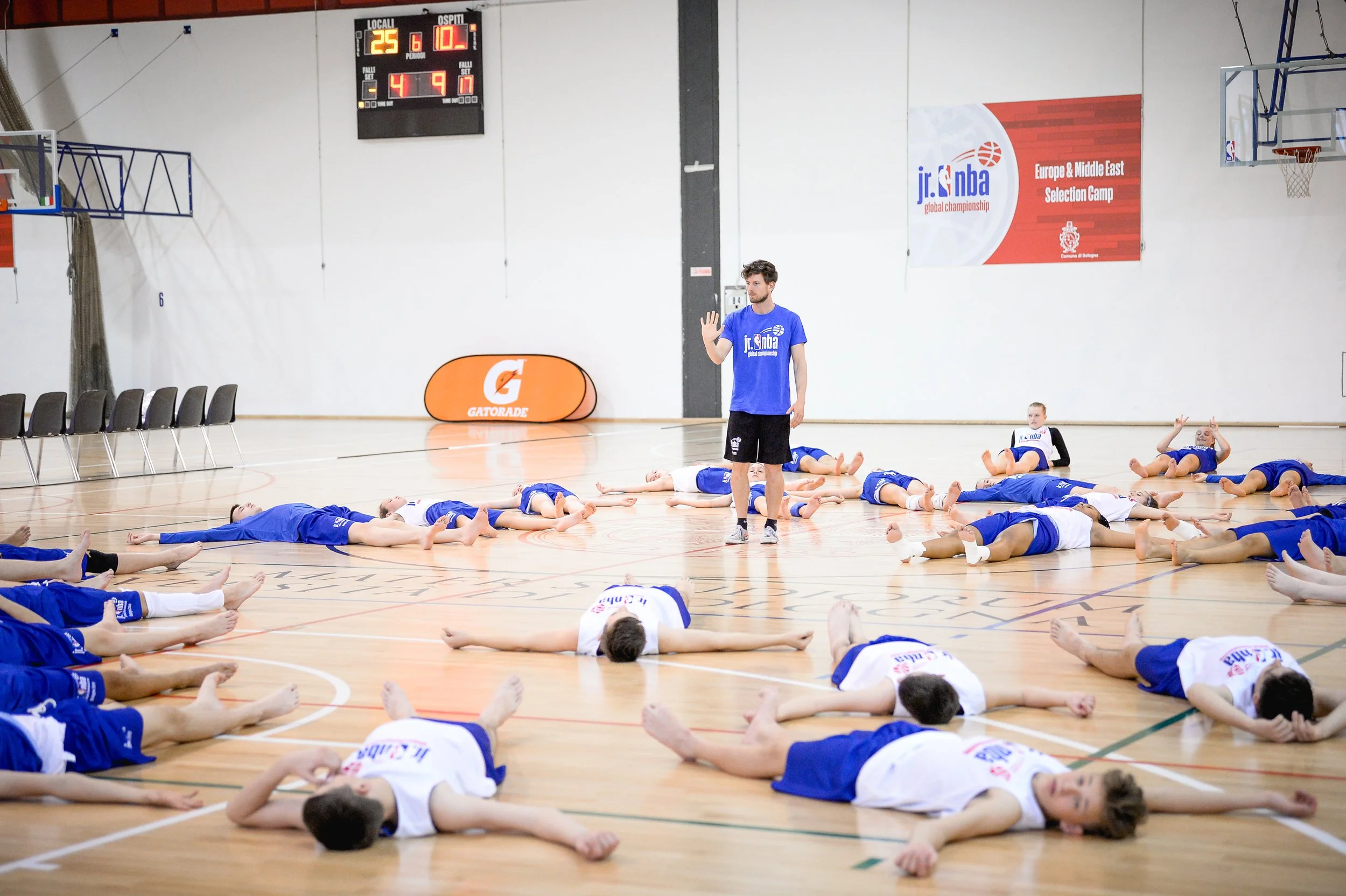
A way back. Ten seconds, usable at the free-throw line, in a timeout, or walking back on defence. Back to zero, as the players I work with call it.
Sight of your own drop. What happens when it goes, what sets it off, and what the first sign is. Most players know the feeling. Few have looked closely enough to see it coming.
Something for the hours around a game. What to do with the tension in the days before, with your phone in the evening, with a head that keeps running after a bad match.
A clearer sense of who you are as a player. That's a different question from who your coach needs you to be on Saturday, and it's one that rarely gets asked.
And half a day in a group going through the same thing. A lot of players are relieved to find out they're not the only one.
Who it's for
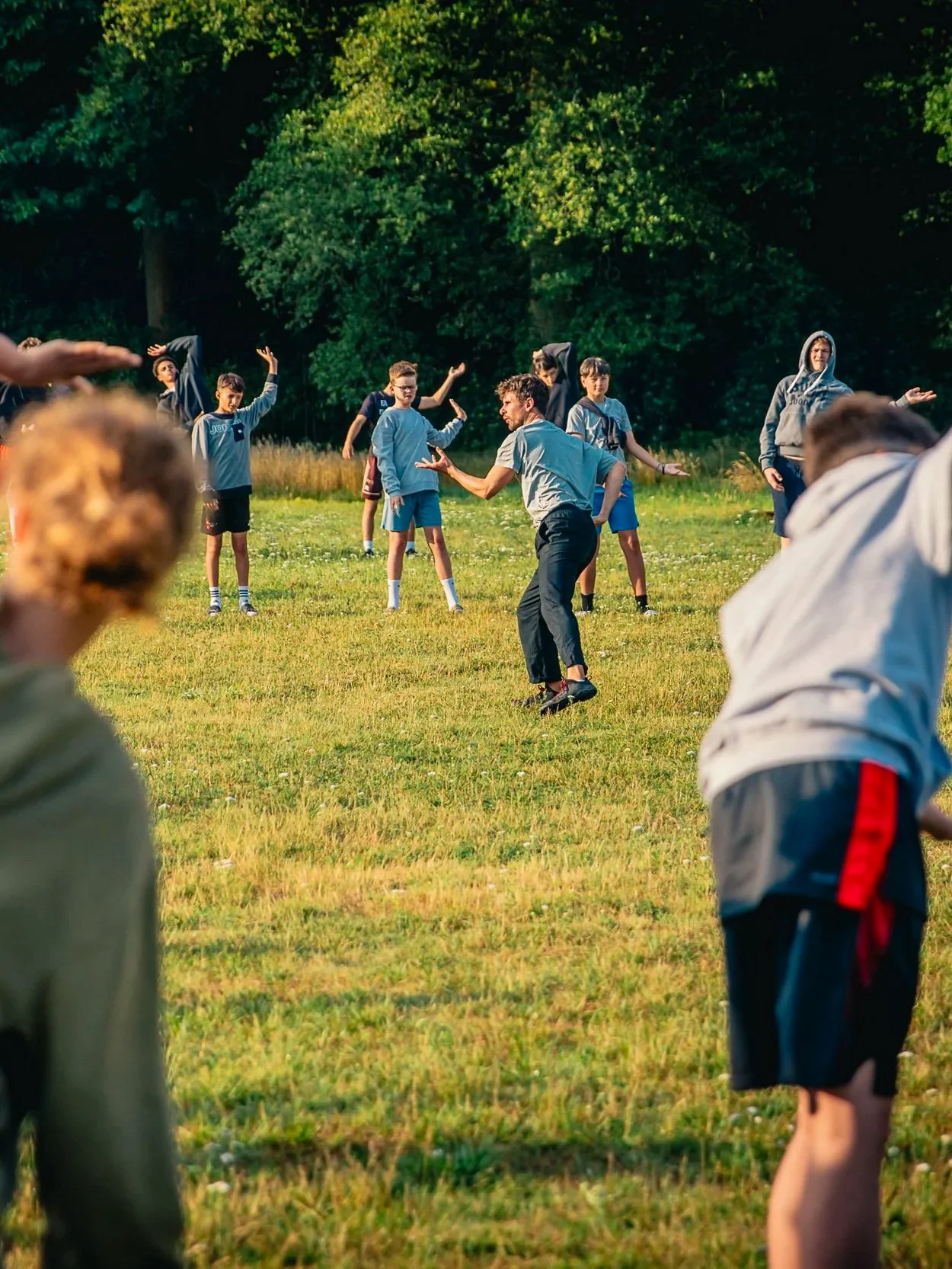
Young athletes in any sport, in a club or academy, training several times a week. You don't need any experience with this kind of work.
It fits athletes who tighten before a game, who spiral after a mistake, who go quiet when a coach raises their voice. And athletes who simply want to understand how they work physically, emotionally and mentally, because they've noticed that the further you go in sport, the more the inner side decides.
You don't need to be struggling to get something out of this. This work supports all the physical work, so you can play freer.
For parents
You can book a place for your son or daughter. Not sure whether it fits? Mail me to check, or book a short call.
A few things worth knowing. What your child says in that room doesn't go to the coach or the club. Phones go in a box for the duration. It's a small group, twelve athletes maximum, so there's enough attention for everyone's experience. Drop-off and pick-up is fine, with plenty of parking within walking distance.
Afterwards you'll hear from me what we worked on, and what your child can keep practising at home. What was shared personally stays between us.
Practical
3 January, 9.30AM to 12PM.
Sub Tilia (Maps link)
Lindeboomstraat 33, 1755 Gooik, Belgium.
Twelve places, ages 13 to 18.
Bring: loose sports clothes, extra outdoor shoes, a water bottle, a notebook and a pencil.
You don't need to prepare. Come without expectations, that works best here.
Coming with two? Brother, sister or teammate: €10 off per person with the code SAMEN.
Until Sunday 13 December: €79. After that, €89.
Dutch or English, depending on who's in the room. Mixed groups are no problem.
Half a day, mid-season, for young athletes. Pressure, body and attention, in play. You go home with your own page and a way back you can use during a game.
In their words
"One missed ball could send him into a spiral. Over five sessions we saw real growth. His head no longer drops after a missed three-pointer, and the match isn't over when the ref makes a call he thinks is unfair. Matches are fun for him again."
— Mother of a 14-year-old basketball player
"Back to zero, I think that's the biggest one. Just being in the moment. It doesn't matter what's going on, how bad or how good.
It's deep, but not cringe. You get to know yourself in the process."
— Deacon Rey, player since age eight, now a basketball and barefoot coach
"My body kind of loved it, the pressure. That was the first tournament I've ever felt the enjoyment in my body instead of locking up."
— Nathan Pellissier, two-time Paralympic table tennis player, Australia
"That playoff period was one long game for me. I couldn't turn it off between matches. After a game I couldn't sleep, because that film kept replaying in my head."
— Jonas Foerts, Belgian national 3x3 team
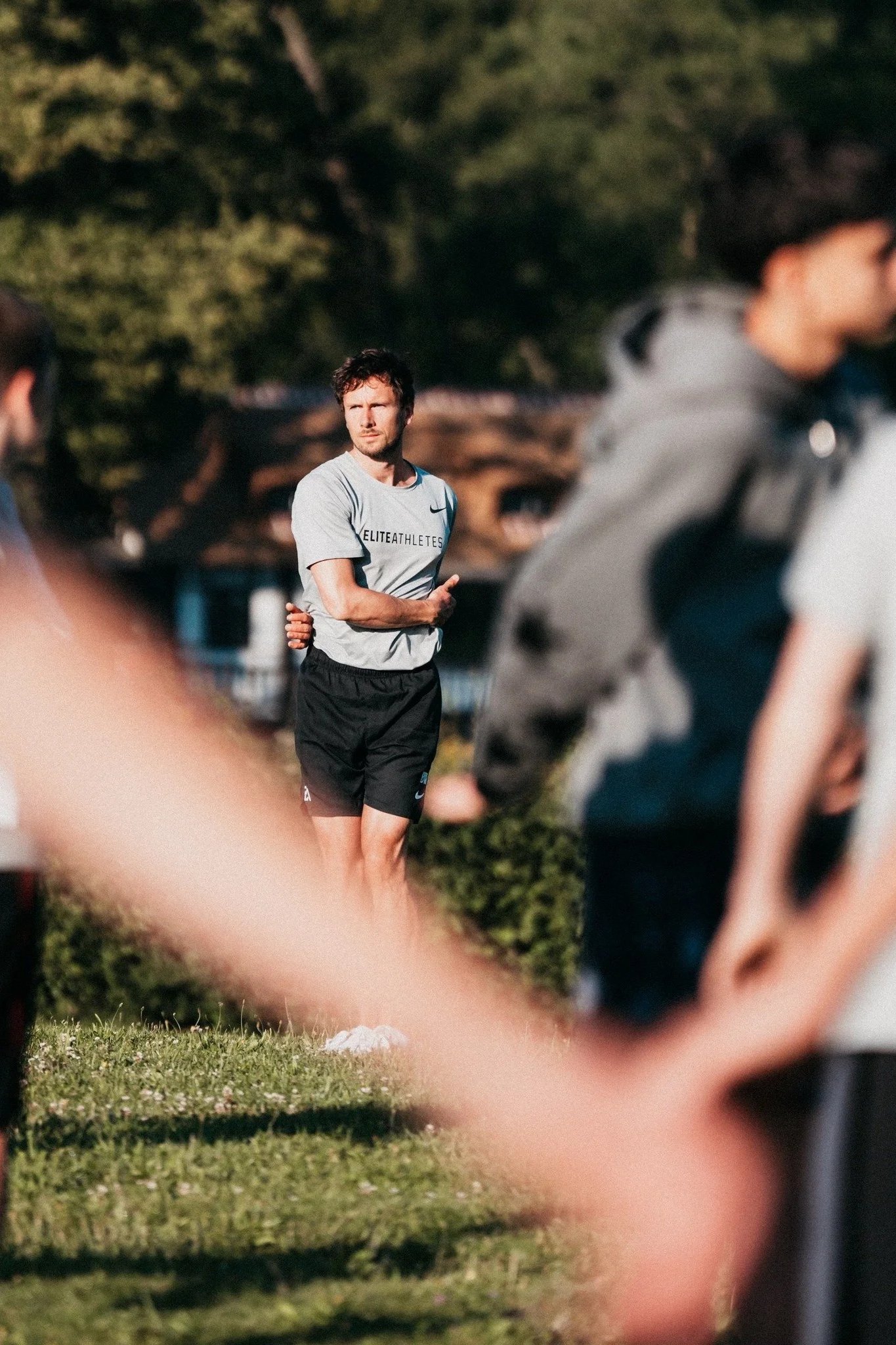
Who I am
Olivier Goetgeluck. I co-founded Elite Athletes, one of the first movement facilities in the Benelux, I'm performance director at Elite Academy Antwerp, and for years I ran basketball camps that reached players from more than 40 countries, with NBA Basketball Without Borders, Jr. NBA, federations and clubs across Europe.
Since then I've worked with people from 6 to 75, in 15 countries. I studied Fighting Monkey with Jozef Frucek and Linda Kapetanea for more than seven years, I'm a mentor with The True Athlete Project, and I work one on one with pros and youth players. I've been running Reheats since 2015.
I'm trained in child safeguarding and protection through NSPCC Learning, the British reference in that field.
More about me → About
Rather one on one?
This is a first encounter with the work, in a group. Some players prefer to work individually, or want to go deeper afterwards, through the season, with their own patterns, at their own pace. I do that all year round, online and in Antwerp, youth to pro.
More → Athlete Mentoring
For clubs and camps
I run this format inside clubs and camps too, for a team or an age group. Interested for yours? Get in touch.