Deze pagina is ook beschikbaar in het Nederlands. → Lees hier verder
Athlete Mentoring
For young athletes on the way up, and the ones already there.
Most athletes train the body and the skill. Almost no one trains the thing that decides what happens under pressure - the little voice, the habit, the way you hold tension into the moments that matters.
That's the work here.
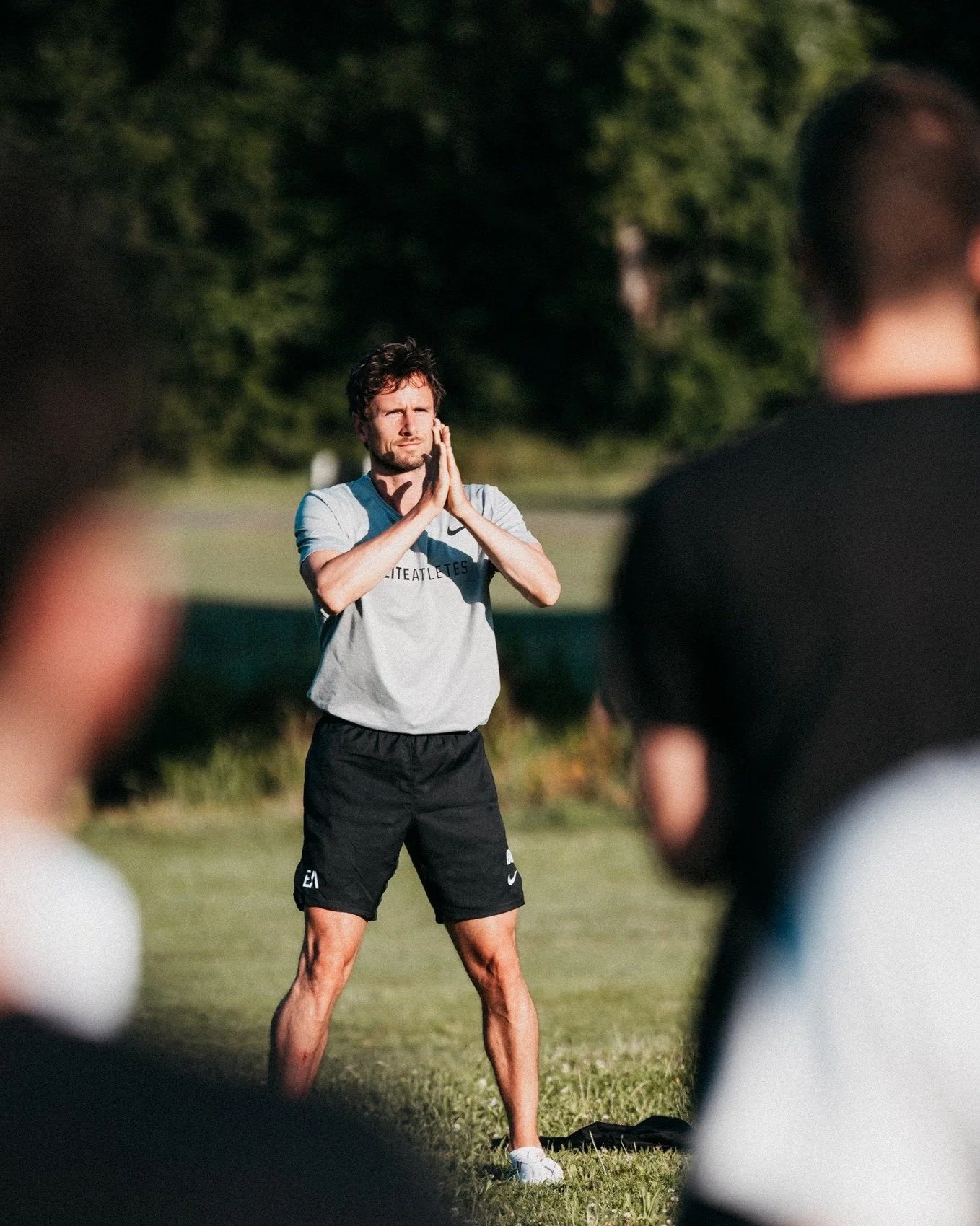
I've been mentoring athletes - youth-to-pro and professional - for over a decade. Not to fix them. To help them understand how they actually work, and give them mental and physical resilience tools they keep for the rest of their career, long after we stop working together.
What mentoring is
A mentoring relationship built around one athlete and how they move, think, and recover.
The first session is a sketch. We map what happens when the pressure rises - what changes in your body, what the internal dialogue starts saying, where the tension gathers. We look for what many athletes describe as The Drop: the moment where training performance and game performance split. Where the player who was sharp in practice suddenly isn't there in the match. Most athletes know the feeling. Few have looked at it deeply enough to understand exactly what triggers it and what it produces. That's where we start.
From there, the work moves into various tools - attention training, somatic work, movement practice, imagery, mastering the inner voice - building what I call the 24/7 athlete's toolbox. Not a programme to follow. A set of capacities that travels with you as a lifestyle.
We train the body as an intelligent system, not a machine. We look at what happens inside you when the pressure climbs - and whether that reaction is the one you’d choose. We build the habits that support performance when it counts: how you arrive, how you recover, how you talk to yourself when the first three shots don't immediately fall.
Some of this is physical. Some of it is attention. Most of it is both at once, because they were never separate. We work on the bodymind interconnection.
Who it's for
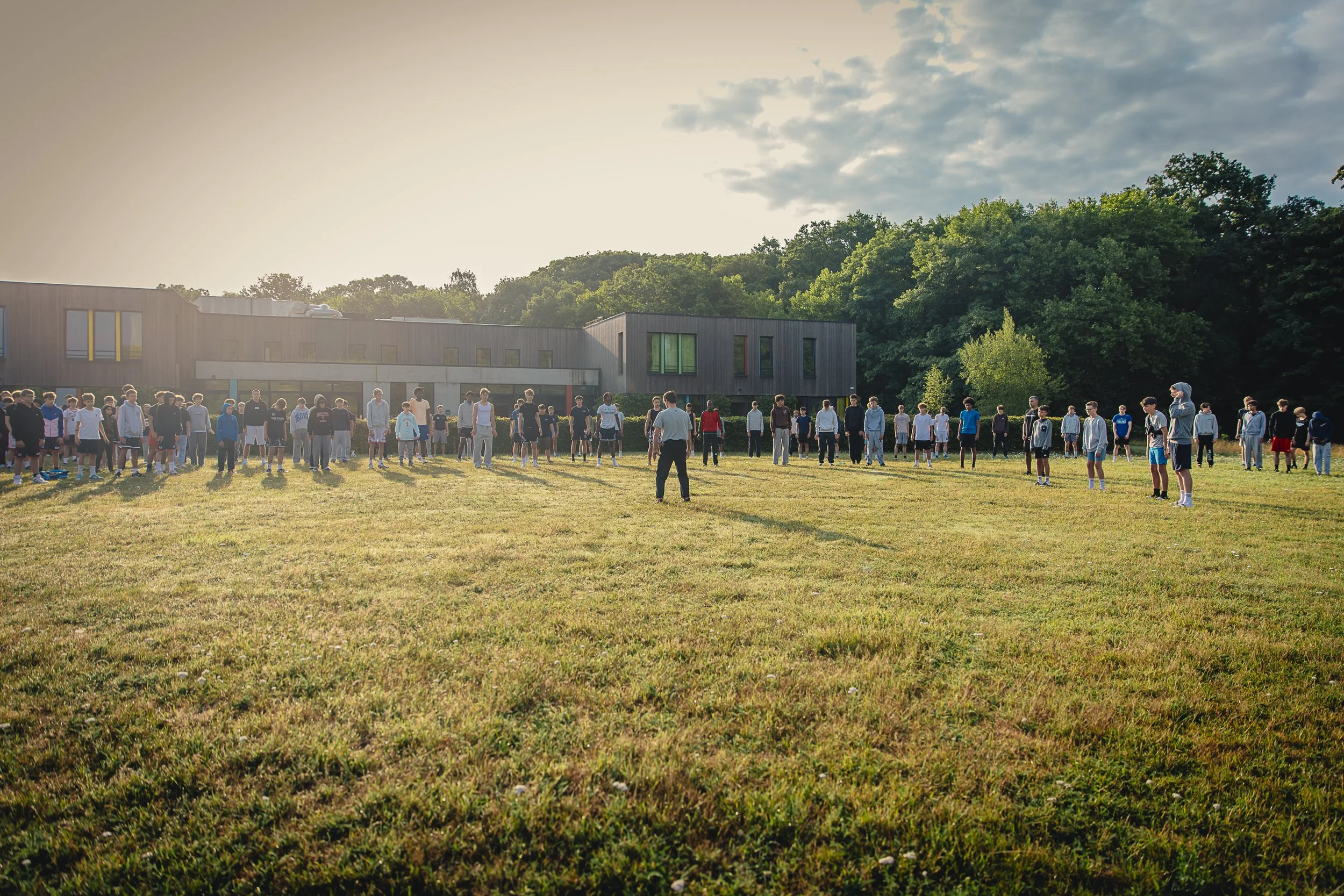
You're an athlete - or the parent of one - and something in the description above already landed.
This work tends to fit athletes who:
want to perform under pressure without tightening up
carry tension into the moments that matter most
are held back by their own internal voice more than by any opponent
want to build a body that lasts a long career (and after!), not just a good season
are ready to look honestly at their own patterns and do something with what they find
had a recent negative experience, f.ex. with a coach who got into their head
You don't need to be struggling to do this work. Most of the athletes it suits are already good. They want to understand why - and become harder to knock off balance.
It’s a path of endless refining.
"Our 14-year-old son came back to the court unsure of himself, after a hard season where injuries and a double knee operation meant he could barely play. What he could do in training often didn't come out in competition. One missed ball could send him into a spiral.
Over five sessions, we saw real growth. His head no longer drops after a missed three-pointer, and the match isn't over when the ref makes a call he thinks is unfair. He stands more solidly on his own feet, on the court and off it. Matches are fun for him again - he can relax, laugh, enjoy the game.
For us as parents, it was valuable too. Olivier gave us tools that made us reflect on our own role, and the impact we have - often unconsciously - on our child."
— Veerle, mother of Bent

How we work together
Four ways in, depending on where you are and how deep you want to go.
Single Focus Block - 2 to 3 session
One thing, worked properly. Quieting the inner voice. Recovering after a bad game. Getting over a coach who got into your mind. A short, focused block on a single topic.
Deep Dive Trajectory - 5 or 10 sessions trajectory
Room to work across a few connected areas - pressure, attention, recovery, rhythm. Enough time to build something that holds.
Season Mentoring - off-season to post-season
We work through a full competitive cycle. Build in the quiet months, sharpen as the season starts, hold steady when it matters, review when it's done. A personal plan that travels with you.
The deepest version. A full season of development across body, attention, and the inner game - with the time and space for real change to settle and stay.
Every option is available online, in person, or hybrid. Direct contact between sessions over Signal or Telegram, so a question doesn't have to wait.
In their words
"My body kind of loved it, the pressure. That was the first tournament I've ever felt the enjoyment in my body instead of locking up."
— Nathan Pellissier, Two-time Paralympic Table Tennis Player, Australia
"The moment I stopped trying to control everything was when I finally had the breakthrough in my game. Olivier taught me how to slow my life down on and off the court. Your body can speak to you if you listen. Everything that happens after the awareness comes is nothing but a choice."
— Codi Miller-McIntyre, Professional Basketball Player, 9 seasons in Europe
"Before a stressful match I feel it in my body - something's not right. I couldn't nap, which never happens to me. Within ten seconds of the practice we did together, my body starts releasing. Shoulders, hips - I feel where everything has been held. The tension leaves, and that gives a signal to my brain: we can relax now. When I start a match too tense, I already know beforehand it won't be a good one. I'm not in the moment. Now I see my body as a tool - something that can help me, but not something that defines me. That shift gives me a kind of observer's perspective. I don't take everything so personally or so finally."
— Dennis Donkor, 3x3 Basketball Player, Belgium
"I wasn't super far from a starting burnout at one point. That goal, that hope, has been fulfilled. And I think just in time."
— Jonas Foerts, Professional Basketball Player
What you sign up for
This is a trajectory, not a series of standalone sessions.
What that means in practice: between sessions, you have direct access to me over a messaging app. Questions don't wait until the next call. Video feedback is available - send a clip from training or a game, and I'll respond with specific observations. You receive workbook materials and resources tailored to what's coming up in your work. And the practices we develop together are designed to live in your daily lifestyle, not just in the hour we share.
The sessions are the spine. Everything around them is where most of the development actually happens and extends to.
Investment
Mentoring starts at €397.
Pricing depends on the length and depth of the trajectory you choose. A focused 3-session block addressing a couple of specific obstacles sits at one end. A full season or year-long mentoring relationship sits at the other. Both include between-session support, messaging app access, video feedback, and resources - continuity is part of what you're investing in, not an add-on.
Pricing differs for youth athletes and professionals.
That's covered in the discovery call.
Support for parents
The environment around an athlete is part of the athlete's development. What happens in the car on the way home matters. The look from the sideline matters. The question you ask after a bad game matters.
I supports parents separately - not to coach them, but to give them tools for the fine balance between support and expectation. There's a difference between a parent who wants their child to fulfil their potential and one who projects what that potential should look like. Children feel both, often without words. The posture, the silence, the tone in the car - these transmit.
I've developed a series of resources on what I call the Conscious Sports Parent - how to support without projecting, how to stay present without adding pressure, how to ride that fine line between encouragement and expectation.
If you're a parent reading this, the discovery call can be with you, the athlete, or both.
The curriculum
The work moves across various layers. They're woven together, not taught in sequence - but here's what lives inside each one.
The Body That Carries Your Game
Movement quality and grounded posture as the base under everything. Coordination and rhythm as the real foundation of an explosive first step, a clean pivot, a relaxed shot. Learning to move with power that feels effortless rather than forced. Building a body that lasts - through intelligence, not just more weight and more reps.
Relaxation Under Pressure
The most underrated skill in sport: staying loose when it counts. A tense body is slower, makes more mistakes, gets hurt more easily. We train the interplay between tension and release - so you perform from calm, not in spite of nerves.
Return to Zero
Return to Zero is a physical state as much as a mental one. A posture, a readiness, an open stance - not preparing for something specific, but available for whatever the game presents. Like meditation, but inside the dynamic of play. When you're not in zero, you're either still in the last possession or already in the next one. You're not here. Return to Zero is the practice of coming back - to the court, to the moment, to the actual options in front of you. It's what you lose most under pressure, and what you can always get back to as you practice returning.
The Inner Voice
Everyone has the little voice. The best players are masters of it (whether in meditation or on the court) - not free of it. We look at what it says under pressure, and build the ability to hear it without obeying it.
One exercise is mapping what I call your ‘Best Of…Inner Voice’ Album - the sentences you say to yourself during games, especially the ones that work against you. Things like: I missed three times, so today's an off day. Or the referee cost us that. Or I didn't eat right before this. Sentences that sound almost logical but pull you out of the present moment and hand your game and agency to whatever happened ten minutes ago.
One young player I worked with had an image of a little bird circling their head during games, telling them to pass the ball the moment he got it. The bird was running his decisions. Once he could see the bird - name it, notice when it arrived - he could change his relationship to it. The voice didn't disappear immediately. He just stopped obeying it automatically.
Attention as a Trainable Skill
Your phone wants your attention. Your thoughts want your attention. Here you learn to aim it yourself - on the court, in the classroom, at home. Mental freedom is a skill, like a crossover. You’ll practice creating thoughts you actually want - imagine designing your own mental algorithm.
Rhythm, Habits, and Adaptation
Habits make us efficient and they make us automatic - the question is which ones you've chosen. We work on changing rhythm, posture, and pattern so you stay unpredictable to others and adaptable yourself. You're not stone. You're clay. I call it mind sculpting.
Recovery and the 24/7 Athlete
Sleep, recovery, and the honest conversation about food - tied to what you're trying to do, not to a diet plan someone handed you. The development that happens away from the gym, where most of it actually happens.
Who I am
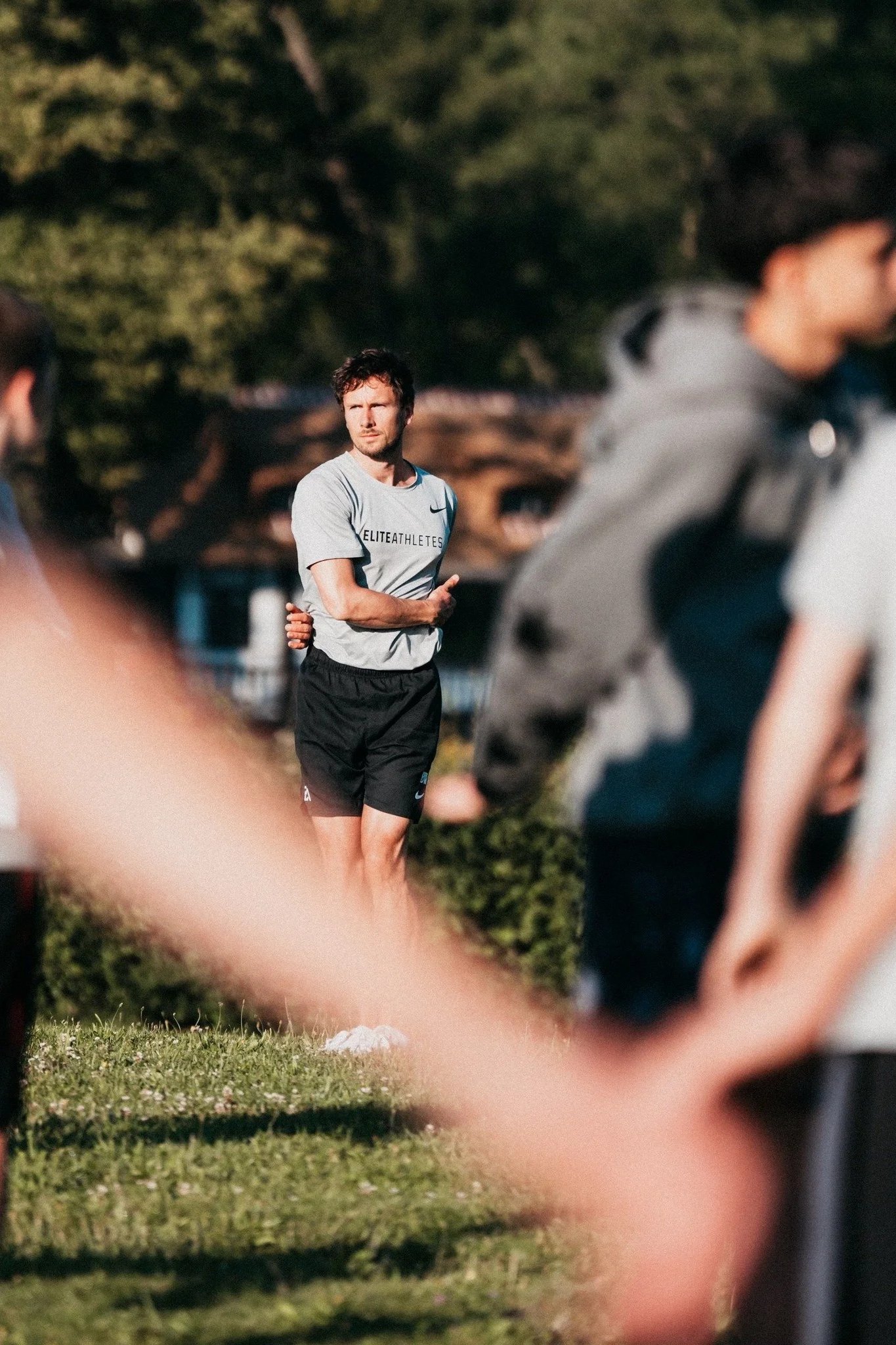
I've spent more than fifteen years working with young people in sport, education, and the places where they get stuck.
My aim is simple: to expand an athlete's relationship with their body and mind beyond competing and comparing so sports can be a meaningful and transformative learning environment that gives them tools on and off the court.
The body becomes a way to understand yourself - and to build the physical and mental resilience that lets you keep moving toward what you want, past whatever gets in the way.
I don't fix athletes. I help them understand themselves better to suffer less and play freer. The goal is always independence: an athlete who knows how their own body and mind work, and can look after both without me.
Where to start
A discovery call. Twenty minutes, no cost.
We'll talk about where you are, what you're working toward, and whether this is the right kind of support.
The call can be with the athlete, the parent, or both - whatever fits.
Frequently Asked Questions
-
The short answer: we don't just talk about it.
We use the body, play, and simulation environments that recreate the pressure of competition - so the athlete gets on the floor with me, not just in a chair. Games are played. Difficult situations are recreated physically and visually.
The mental and physical work happens together, the way it does in actual sport. This makes the learning more implicit, more durable, and less likely to stay locked inside a clinical session that never quite connects to what happens physically on the court.
-
Youth athletes from around 12 upward, through to professional and elite level. The tools are the same - what changes is the language, the pacing, and how much life experience we have to work with. Some of the most significant shifts I've seen have been with young players in their mid-teens, before patterns become more rigid.
-
Both. A significant part of the work - attention training, inner voice mapping, imagery, conversation - translates fully online. The physical and movement elements work best in person, in Antwerp or at the athlete's location when that makes sense logistically. Many trajectories are hybrid: some sessions in person, some online.
-
Depends on the athlete and what they're working on. Some players notice a shift within two or three sessions - particularly around the inner voice and physical tension under pressure. Deeper patterns take longer. The Single Focus format is designed for athletes who want to work on one specific thing in a short, contained block. The longer formats are for those who want something that settles properly and stays.
-
Direct messaging access so questions don't have to wait. Video feedback on request - send a clip from training or a game and I'll respond with specific observations. Workbook materials and resources tailored to what's coming up in your work. The between-session time is where most of the development actually happens, and the support is designed around that.
-
Individual mentoring is the primary offer on this page. For team workshops or group sessions - for sports clubs, academies, or coaching staff - get in touch separately and we'll discuss what makes sense.
-
The work is with the athlete, not on behalf of a parent's agenda - however well-intentioned. The best outcomes happen when parents stay curious and back off slightly from the results. I offer a short resource series for parents to support exactly that. Parents are welcome on the discovery call.
-
The discovery call will tell you more than any checklist. In general: an athlete who is curious about their own patterns, willing to look honestly at what's happening inside them, and not just looking for someone to tell them what to do - that athlete is ready. Age matters less than intent.